Sun exposure is one of the biggest enemies of your vehicle’s exterior. While sunlight may seem harmless, prolonged exposure to ultraviolet (UV) rays can gradually damage your car’s paint, causing fading, oxidation, discoloration, and clear coat failure. If you live in a hot or sunny climate, protecting your car’s paint from the sun isn’t optional — it’s essential.
In this guide, you’ll learn exactly how sunlight affects automotive paint, why UV damage happens, and the most effective methods professionals use to protect vehicle finishes from sun damage.
Why Sunlight Damages Car Paint
Car paint consists of several layers:
- Primer
- Base color coat
- Clear coat
The clear coat is the outermost layer that protects the paint beneath it. Over time, UV radiation breaks down this protective layer through a process called oxidation. Once oxidation begins:
- Paint loses gloss
- Color fades
- Surface becomes rough
- Clear coat may peel
Dark-colored vehicles are especially vulnerable because they absorb more heat and UV radiation than lighter colors.
Signs of Sun Damage on Car Paint
Recognizing early warning signs helps you prevent permanent damage.
Common symptoms include:
- Dull or chalky finish
- Fading color
- White or cloudy patches
- Peeling clear coat
- Rough texture
If you notice these signs, immediate protection measures can slow further deterioration.
Best Ways to Protect Car Paint from Sun Exposure
1. Park in Shade Whenever Possible
The simplest and most effective method is reducing direct sunlight exposure.
Best parking options:
- Covered garages
- Underground parking
- Carports
- Shade structures
If shade isn’t available, parking beside buildings or walls can still reduce UV exposure significantly.
2. Use a Car Cover
A high-quality car cover acts as a physical barrier against UV rays, dust, and heat.
Benefits:
- Blocks sunlight completely
- Prevents heat buildup
- Protects against environmental contaminants
Choose a breathable cover designed for outdoor use so moisture doesn’t get trapped underneath.
3. Apply Paint Protection Film (PPF)
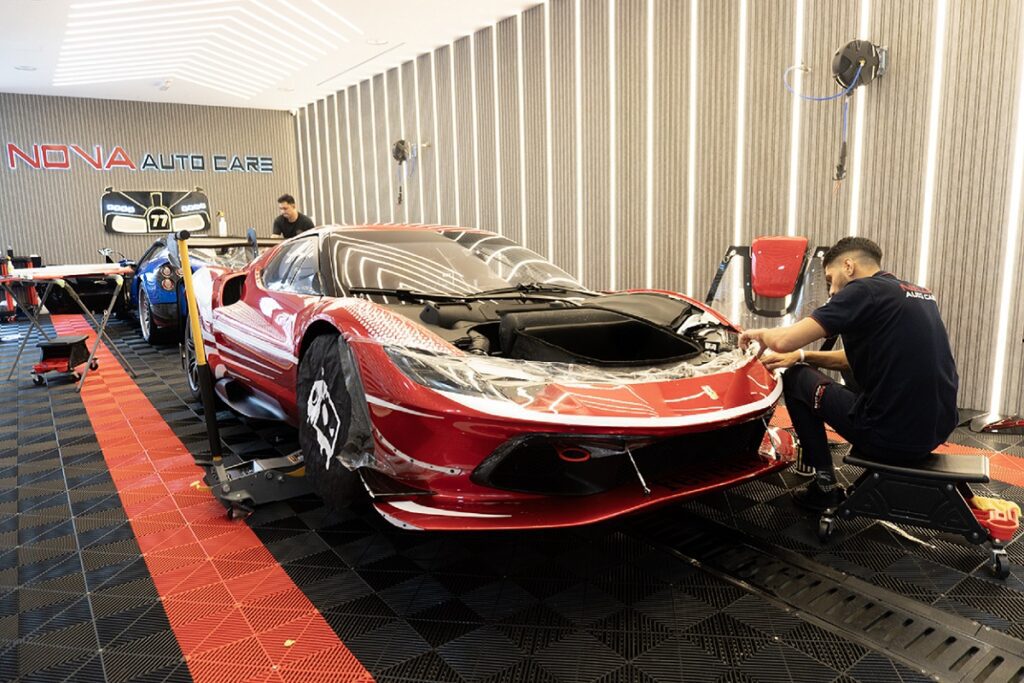
Paint Protection Film is one of the most effective solutions for sun protection. Premium films include UV inhibitors that shield paint from radiation and oxidation.
Advantages:
- Blocks harmful UV rays
- Prevents fading
- Protects against scratches and chips
- Maintains gloss
This is the preferred option for car owners who want long-term protection.
4. Install a Ceramic Coating
Ceramic coatings create a transparent protective layer over the paint that reflects UV rays and reduces heat absorption.
Benefits include:
- UV resistance
- Hydrophobic surface
- Easier cleaning
- Enhanced shine
While ceramic coatings don’t physically block impact damage like PPF, they significantly slow sun-related paint deterioration.
5. Wash Your Car Regularly
Dust, dirt, and pollutants can accelerate sun damage by trapping heat and chemicals on the paint surface.
Recommended routine:
- Wash every 1–2 weeks
- Use pH-neutral shampoo
- Dry with microfiber towels
Clean paint reflects sunlight better than dirty paint, reducing heat absorption.
6. Apply Wax or Sealant
Wax acts as a temporary protective barrier between sunlight and your paint.
Advantages:
- Reflects UV rays
- Adds shine
- Reduces oxidation
- Provides short-term protection
However, wax wears off quickly and must be reapplied regularly, typically every 2–3 months.
7. Avoid Parking Under Direct Sun for Long Periods
Long-term exposure is far more damaging than short bursts. Parking for hours daily under direct sunlight accelerates clear coat breakdown.
If unavoidable:
- Rotate parking direction
- Use windshield sunshades
- Cover the hood or roof
Even small changes can reduce damage over time.
8. Dry Your Car After Washing
Water droplets act like magnifying lenses in sunlight, intensifying UV rays and causing water spots or paint etching.
Always dry your car after washing, especially in sunny conditions.
9. Use Professional Detailing Services
Professional detailers use specialized products that offer stronger UV protection than consumer-grade products. Services may include:
- Paint sealants
- Ceramic coatings
- Paint correction
- Protective top coats
Regular professional detailing keeps paint healthy and resistant to environmental damage.
10. Consider Garage Storage for Long-Term Parking
If your vehicle won’t be used for weeks or months, indoor storage is the best protection. Long-term sun exposure without movement or cleaning can severely damage paint.
Which Protection Method Is Best?
Each method offers a different level of protection:
| Protection Type | UV Protection Level | Durability |
|---|---|---|
| Shade Parking | Medium | Daily solution |
| Car Cover | High | Short–medium term |
| Wax | Medium | 2–3 months |
| Ceramic Coating | High | Years |
| PPF | Maximum | Long-term |
For maximum protection, professionals often recommend combining methods. For example:
PPF + Ceramic Coating + Smart Parking = Ultimate Protection
Does Climate Affect Paint Damage Speed?
Yes. Cars in these environments experience faster paint deterioration:
- Desert climates
- Tropical regions
- Coastal areas
- High UV index zones
In such climates, protection isn’t just cosmetic — it’s necessary to preserve your vehicle’s value.
Long-Term Benefits of Sun Protection
Protecting your paint from UV damage offers more than just appearance benefits.
Advantages include:
- Higher resale value
- Reduced repainting costs
- Longer clear coat life
- Better gloss retention
- Easier maintenance
Investing in protection early is always cheaper than repairing sun-damaged paint later.
Common Mistakes That Cause Sun Damage Faster
Avoid these habits if you want to keep your paint looking new:
- Leaving bird droppings on paint
- Washing with harsh detergents
- Skipping waxing or protection
- Using abrasive sponges
- Ignoring oxidation signs
Small mistakes repeated over time can dramatically shorten paint life.
Final Thoughts
Sunlight is unavoidable, but paint damage doesn’t have to be. With proper protection methods — such as parking in shade, applying protective coatings, washing regularly, and using high-quality protective films — you can significantly reduce the harmful effects of UV exposure.
The key is consistency. Protecting your vehicle’s paint isn’t a one-time action; it’s an ongoing process. The sooner you start protecting your car from the sun, the longer your paint will remain glossy, vibrant, and damage-free.
Learn how to protect your car’s paint from sun damage with expert tips and proven methods. Nova Auto Care provides professional solutions to keep your vehicle’s paint glossy, protected, and long-lasting.