One of the most common questions car owners ask before installing paint protection film is: Is full body PPF better, or should you only protect high-impact areas? The answer depends on several factors, including your budget, driving habits, vehicle type, environment, and expectations for long-term paint protection.
Both options offer benefits, and neither is universally “better” for everyone. The right choice is the one that matches your needs, priorities, and how you use your car. In this complete guide, we’ll compare full body PPF and partial PPF coverage in detail so you can make the best decision with confidence.
What Is Full Body PPF?
Full body PPF means that every painted exterior surface of the vehicle is covered with protective film. This typically includes:
- Hood
- Fenders
- Doors
- Bumpers
- Mirrors
- Trunk
- Quarter panels
- Roof (optional but recommended in hot climates)
Essentially, the entire painted surface is shielded from scratches, rock chips, UV rays, stains, and environmental damage.
What Is Partial PPF Coverage?
Partial coverage focuses only on areas most likely to be damaged. These are called high-impact zones, and they usually include:
- Front bumper
- Partial hood
- Side mirrors
- Headlights
- Fender edges
Some packages also include rocker panels or door edges. This option is designed to provide protection where damage happens most frequently while keeping costs lower.
Key Differences Between Full and Partial PPF
Understanding the core differences helps you decide which option suits your situation.
| Feature | Full Body PPF | Partial PPF |
|---|---|---|
| Protection Level | Maximum | Moderate |
| Cost | Higher | Lower |
| Appearance | Seamless | Visible lines possible |
| Maintenance | Easier | Slightly more attention |
| Resale Value | Highest | Moderate |
| Longevity | Even wear | Uneven wear |
Advantages of Full Body PPF
1. Maximum Protection
Full coverage protects every painted panel, not just high-impact zones. This means your vehicle is shielded from:
- Road debris
- Scratches
- UV fading
- Bird droppings
- Chemical stains
- Light abrasions
For owners who want complete peace of mind, this is the most secure option.
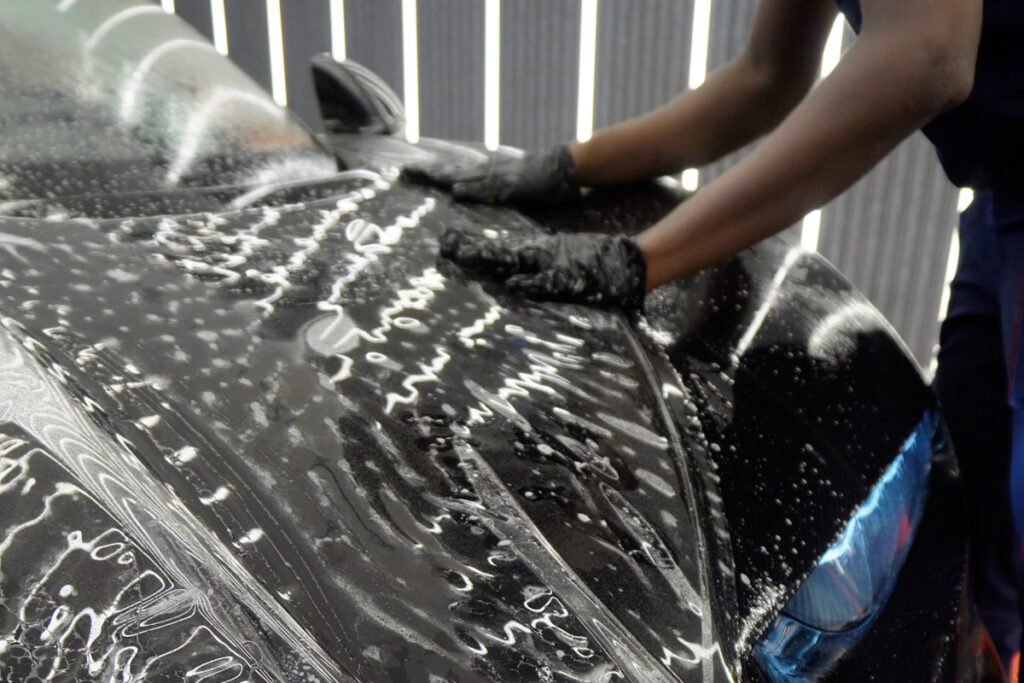
2. Invisible Finish
With full coverage, there are no visible edges or transition lines between protected and unprotected areas. The entire vehicle looks uniform and flawless.
Partial coverage sometimes creates visible lines where film ends, especially on the hood.
3. Better Long-Term Appearance
When only certain panels are protected, exposed areas may fade or wear differently from covered ones. Over time, this can create color inconsistencies.
Full body PPF ensures even aging, so the paint stays uniform across the entire vehicle.
4. Higher Resale Value
Cars with full body protection usually maintain paint condition close to factory level. Buyers often pay more for vehicles with pristine original paint.
5. Ideal for Luxury or New Cars
If your vehicle is:
- Brand new
- High value
- Rare
- Exotic
- Recently repainted
Full body coverage is often the smartest investment because it preserves the finish completely.
Advantages of Partial PPF
1. Lower Cost
The biggest reason people choose partial coverage is affordability. Protecting only high-impact areas significantly reduces installation cost.
This makes it a great option for drivers who want protection but don’t need full coverage.
2. Protection Where It Matters Most
Most paint damage occurs at the front of the vehicle. By covering:
- Bumper
- Hood edge
- Mirrors
you can prevent the majority of rock chips and road damage.
3. Faster Installation
Partial installs take less time than full wraps. Many can be completed in a single day, while full body installs may take several days.
4. Ideal for Daily Drivers
If your car is mainly used for commuting or city driving, partial protection may be sufficient. Urban driving generally causes less paint damage than highway driving.
When Full Body PPF Is the Better Choice
Full coverage is typically recommended if:
- You own a luxury or exotic vehicle
- You plan to keep the car long term
- You frequently drive on highways
- You live in harsh climates (sun, sand, snow, salt)
- You want flawless paint at all times
- You are highly detail-oriented
In these cases, full body PPF offers the best long-term value despite higher upfront cost.
When Partial Coverage Is Enough
Partial PPF may be the smarter option if:
- You’re on a limited budget
- You lease your car
- You change vehicles frequently
- You mainly drive in the city
- You only care about preventing front-end chips
For many drivers, partial protection delivers the best balance between cost and benefit.
Cost Comparison: Full vs Partial
Prices vary depending on vehicle size, film quality, and installer skill, but generally:
- Partial front protection costs a fraction of full coverage
- Full body PPF can cost several times more
However, long-term value should also be considered. Full coverage may reduce repainting or detailing costs later.
Durability Differences
Interestingly, full body PPF often ages more evenly than partial installs.
With partial coverage:
- Protected areas stay pristine
- Unprotected areas accumulate wear
This contrast becomes more noticeable over time.
With full body coverage:
- All panels age at the same rate
- The car maintains a consistent appearance
Maintenance Considerations
Both types require similar care, but full coverage has a slight advantage.
Full body PPF
- Easier washing
- Less worry about contaminants
- Uniform protection
Partial PPF
- Requires attention when washing edges
- Dirt can accumulate along film lines
Aesthetic Considerations
Appearance matters to many car owners.
Full body protection:
- Completely seamless look
- No visible film lines
- Uniform gloss
Partial protection:
- Possible visible edges
- Slight difference in shine under certain lighting
- May be noticeable on darker cars
If aesthetics are a top priority, full coverage is usually preferred.
Hybrid Option: The Balanced Approach
Some owners choose a hybrid solution — more than partial but less than full.
Common mid-range packages include:
- Full front end
- Rocker panels
- Door edges
- Rear bumper strip
This approach protects high-impact areas plus additional vulnerable zones without the full cost of wrapping the entire vehicle.
Installer Quality Matters More Than Coverage Choice
Whether you choose full or partial coverage, installation quality is the most important factor. A skilled installer ensures:
- Clean edges
- Proper alignment
- No trapped debris
- Strong adhesion
A poorly installed full wrap can perform worse than a professionally installed partial kit.
The Real Question: What Do You Expect From PPF?
Instead of asking which option is better, ask yourself:
- Do I want maximum protection or basic protection?
- How long will I keep the car?
- How much do I care about appearance?
- What’s my realistic budget?
Your answers will naturally point you toward the right choice.
Expert Recommendation
Professional installers often recommend:
Full body PPF for:
- New cars
- Luxury vehicles
- Long-term ownership
Partial PPF for:
- Budget-conscious owners
- Daily drivers
- Short-term vehicles
Neither choice is wrong — they simply serve different needs.
Final Verdict
So, is full body PPF better than protecting only sensitive areas?
Yes — in terms of protection, appearance, and long-term value.
But that doesn’t mean it’s the best choice for everyone.
Partial PPF is still highly effective for preventing the most common types of paint damage and can be the smartest solution for drivers who want protection without a large investment.
Simple rule to remember:
- Want maximum protection and flawless paint → choose full body PPF
- Want essential protection at lower cost → choose partial coverage
Both options protect your vehicle — the best one is the one that matches your needs, priorities, and budget.
Full body PPF or partial coverage, which is better? Compare protection levels, costs, durability, and expert tips to choose the best option for your car. Nova Auto Care is the best center for professional PPF installation and paint protection.